
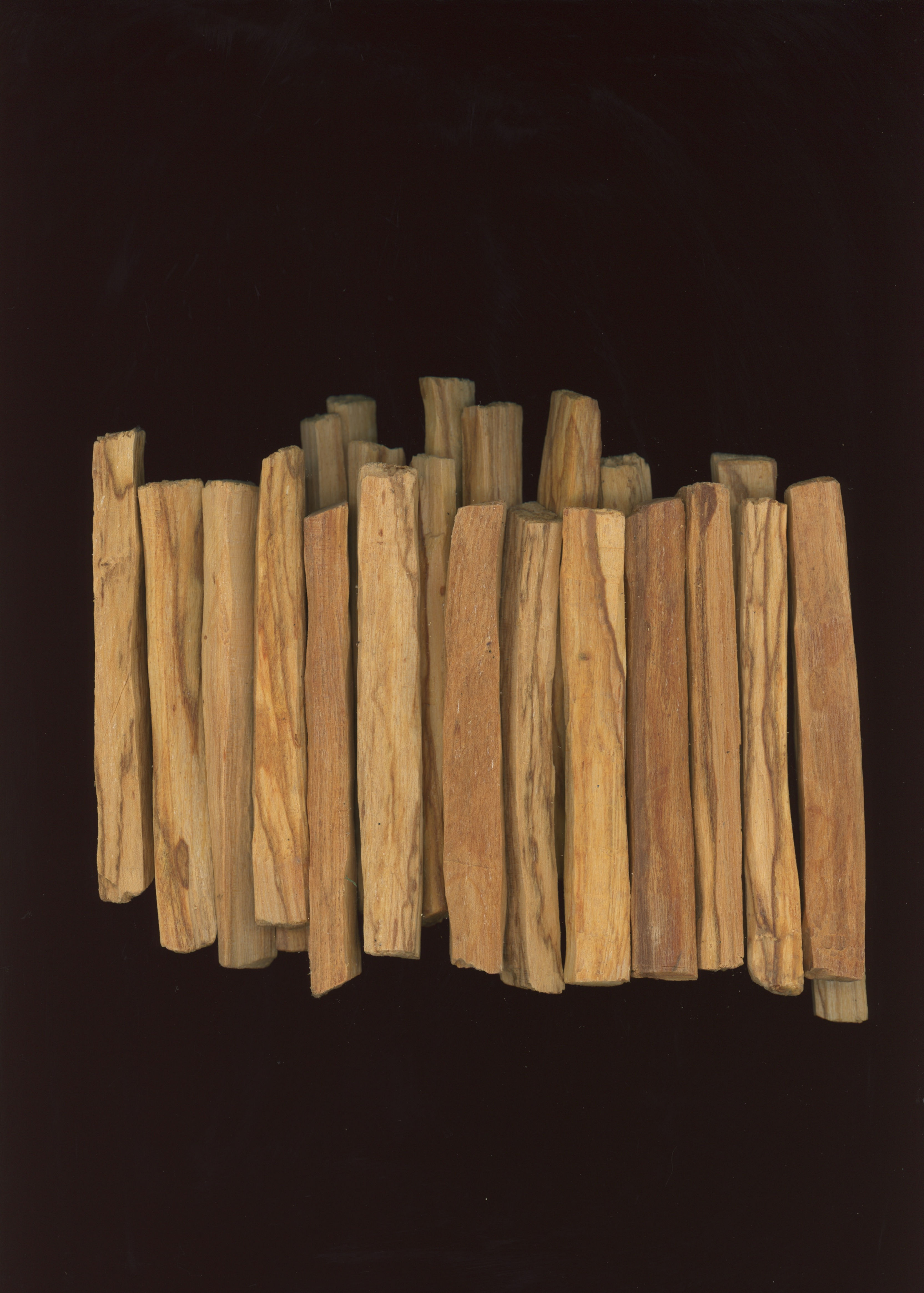

Not all Palo Santo is the same tree.
Bulnesia sarmientoi — also called Palo Santo — is listed as endangered on the IUCN Red List and should not be purchased. Bursera graveolens is a separate species, abundant in Ecuador's dry tropical forests, and the source of these sticks. Knowing the difference matters.
Our sticks are gathered from naturally fallen branches — not cut trees — and aged before harvest, which is when the aromatic resins reach their peak concentration. The scent is citrus-forward, warm, and resinous: lighter and more volatile than frankincense, less medicinal than myrrh.
Two sticks, approximately 4 inches each. Light the tip, let it catch, blow out the flame, and set in a fireproof vessel.
Palo Santo · Bursera graveolens
$10.00Price


